Maarten Ectors
on 20 January 2016
Summary: This blog post will explain why network equipment providers are incorrectly investing in hypervisors to provide network function virtualisation and why Intel bought Altera. The answer is networking.
Until recently switches, routers, DSLAMs, mobile base stations, etc. were all using special purpose hardware components called ASICs. An ASIC is very fast but also inflexible and expensive. General purpose processors are not fast enough to do high speed network switching. So Intel had a hard time competing with companies like Broadcom who are leaders in switching ASICs. Intel processors would only be used in a switch when new packets arrive. The CPU would decide which new switching routes the ASIC needed to set up. Afterwards the processor would not be used. This meant that a switch is full of expensive ASICs and only carries a small general purpose processor.
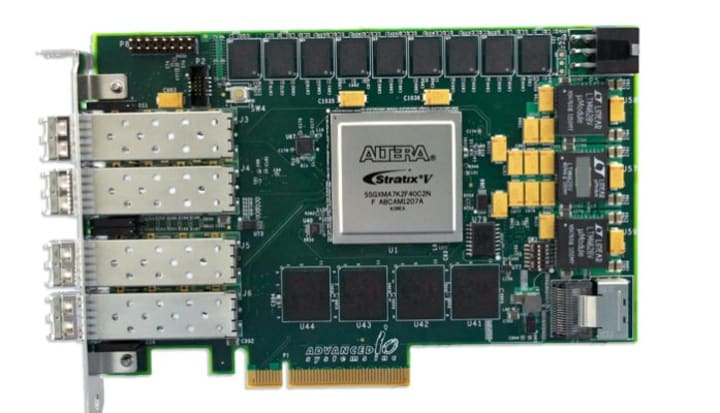
This reality is about to change. More and more networking equipment is using FPGAs. FPGAs combine the best of both worlds. You can programme specific networking logic and get speeds that far exceed general purpose processors. So FPGAs can combine flexibility and speed.
Altera is one of the two big FPGA producers in the world, Xilinx is the other one. By buying Altera and combining FPGAs with general purpose processors, Intel will be able to drive down the price and increase the speed. Intel is not the first to do this. Xilinx’s Zynq-7000 is the example of a combined solution.
Network equipment with new chipsets that combines powerful FPGAs and CPUs in a cost-effective combined offering will revolutionise the networking space. Customers will no longer buy a switch, router, firewall, etc. They will buy a networking white box and define the problem they want to solve by buying the appropriate FPGA and CPU logic afterwards. The way you buy this logic is via App Stores full of networking equipment apps.
The telecom world invented the acronym NFV – network function virtualization. Since the word virtualization was in there, everybody thought that you needed to use a hypervisor. This is actually not the best way of doing things. At Mobile World Congress Canonical together with lots of network partners will demonstrate that the future of networking is a combination of Lightervisors, i.e. lightweight hypervisors [LXD], for scale-out network function virtualization, and FPGAs + Snappy Apps for data plane heavy network function virtualization. This combination allows for high-performance, cost-efficient, flexible and scalable open source solutions. It will revolutionize the way networking equipment will be designed and allow every customer to have a completely personalised solution.